

 Smart AI World
Emergent is an AI agent-based environment that lets you build mobile and web applications with natural language.

If you ask me what Vibe Coding tools I highly recommend, I can only count them on my fingers. I’ve been building web apps in the past four years, and some of the main tools I use are Cursor, Warp, and Claude Code.
However, I am always on the lookout for the latest tools that bring in new features and capabilities that are better than what I am currently using.
A few weeks ago, I discovered a platform called Emergent. It works incredibly well for generating landing pages with AI.
In this post, I’ll walk you through the process of generating beautiful landing pages with Emergent and discuss the reasons why it’s worth checking out.
Let’s get started.
What is Emergent?
Emergent is an AI agent-driven coding platform that lets you build full-stack mobile and web applications in minutes with natural language.
If you are not familiar with the term “vibe coding,” this essentially lets you build complex software applications using plain English — no coding required.

Most tools I use are great at logic but terrible at design. They usually give you flat, boring UI. In fact, I don’t usually use vibe coding tools when creating a landing page for my own products. I’d rather buy a template or build one myself.
But Emergent is likely to change my workflow when it comes to building a landing page. Users can build websites and even mobile apps that support 3D elements and complex layouts right out of the box. You can even hook up integrations like Stripe or Supabase, which can make your app even more powerful.
How to generate a beautiful landing page
Head over to Emergent and create an account for free. Once you’re in, you’ll see the dashboard UI similar to this:
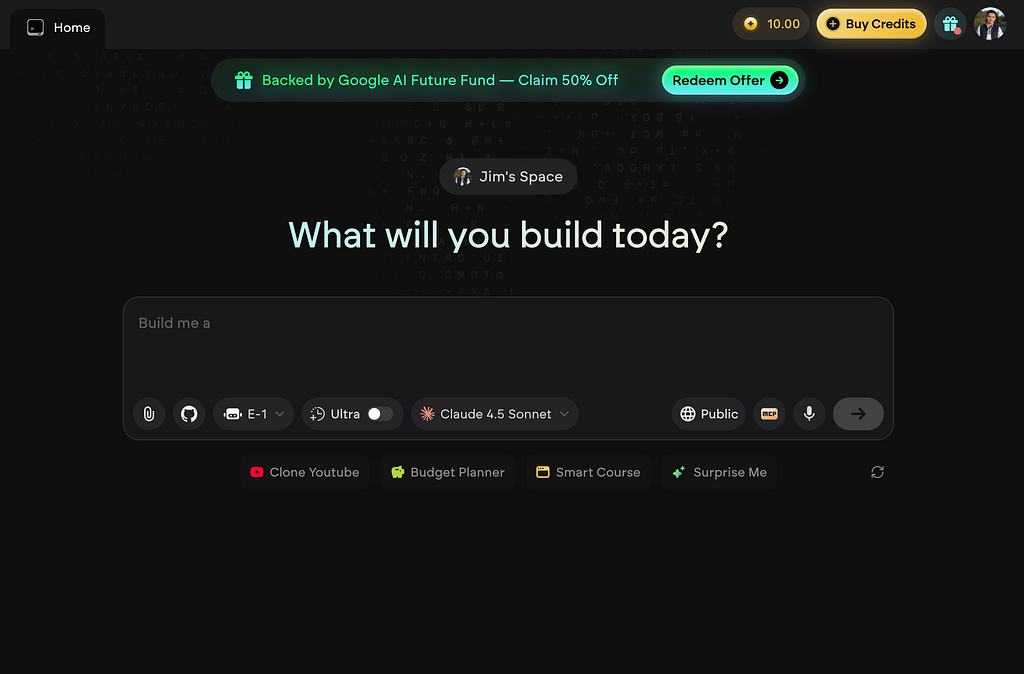
The next step is to describe the application that you want to create. In this example, I only wanted to showcase Emergent’s capability to create high-quality landing pages.
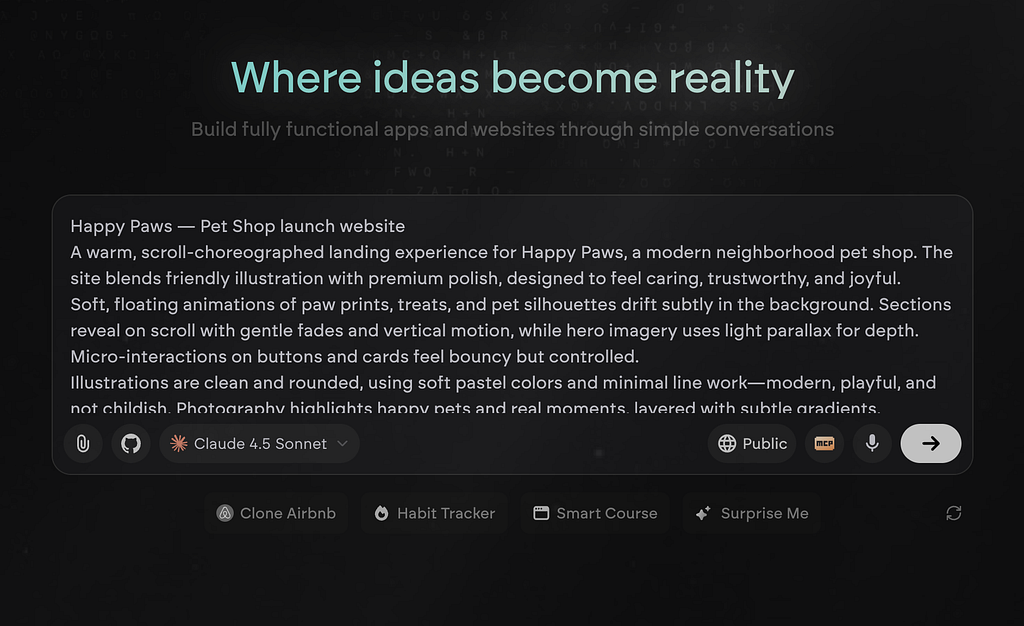
Prompt: Happy Paws — Pet Shop launch website
A warm, scroll-choreographed landing experience for Happy Paws, a modern neighborhood pet shop. The site blends friendly illustration with premium polish, designed to feel caring, trustworthy, and joyful.
Soft, floating animations of paw prints, treats, and pet silhouettes drift subtly in the background. Sections reveal on scroll with gentle fades and vertical motion, while hero imagery uses light parallax for depth. Micro-interactions on buttons and cards feel bouncy but controlled.
Illustrations are clean and rounded, using soft pastel colors and minimal line work — modern, playful, and not childish. Photography highlights happy pets and real moments, layered with subtle gradients.
Built as a fast, responsive landing page with production-ready components, optimized performance, and a clear conversion flow for shopping, grooming bookings, and store visits.
Feel free to explore the other settings and parameters, like the coding model, which I set to Claude 4.5 Sonnet. You can also link a GitHub project to seamlessly sync the codebase and not worry too much about the CI/CD.
For even more advanced controls, click the little settings button, and the advanced controls sub-menu should be displayed.
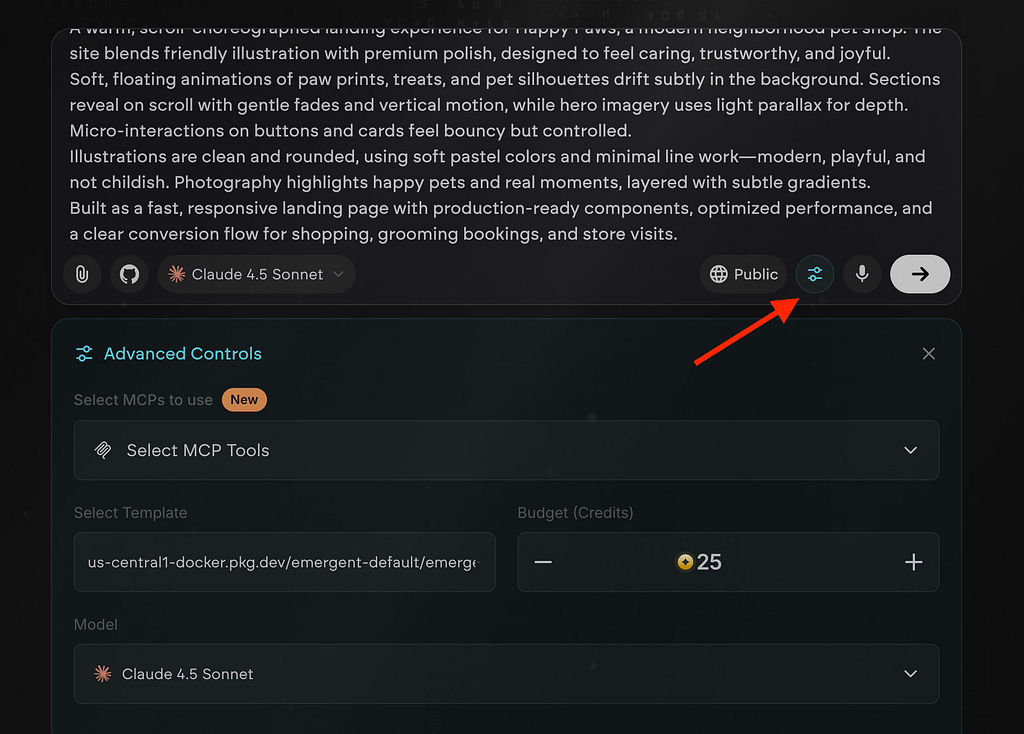
From here, you can connect MCPs, limit the budget, or choose your desired template. Once the configuration is done, click the submit button and wait for the final result to be rendered on the screen.
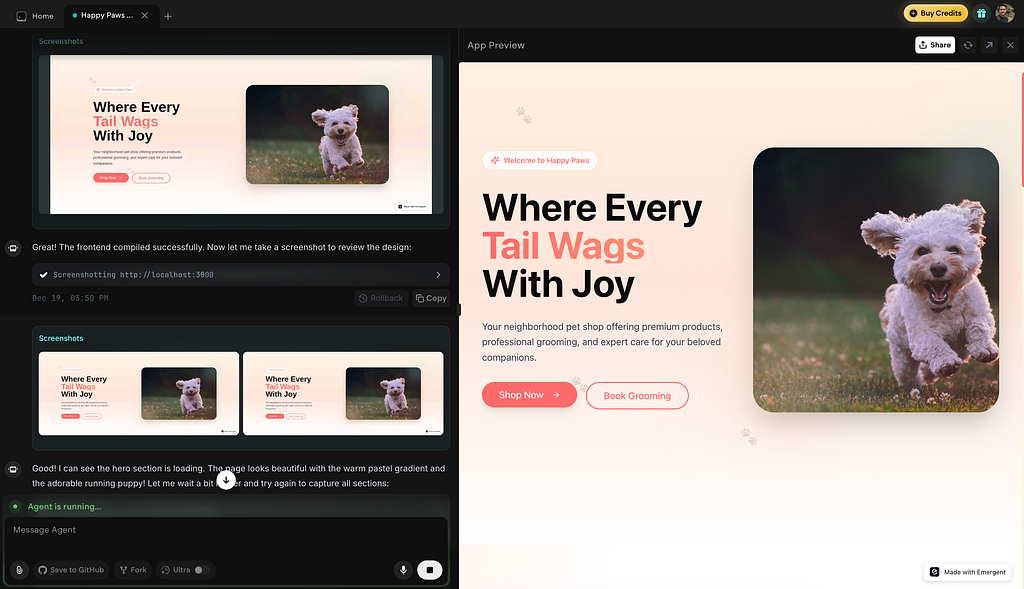
Here are some screenshots of the different sections of the landing page:
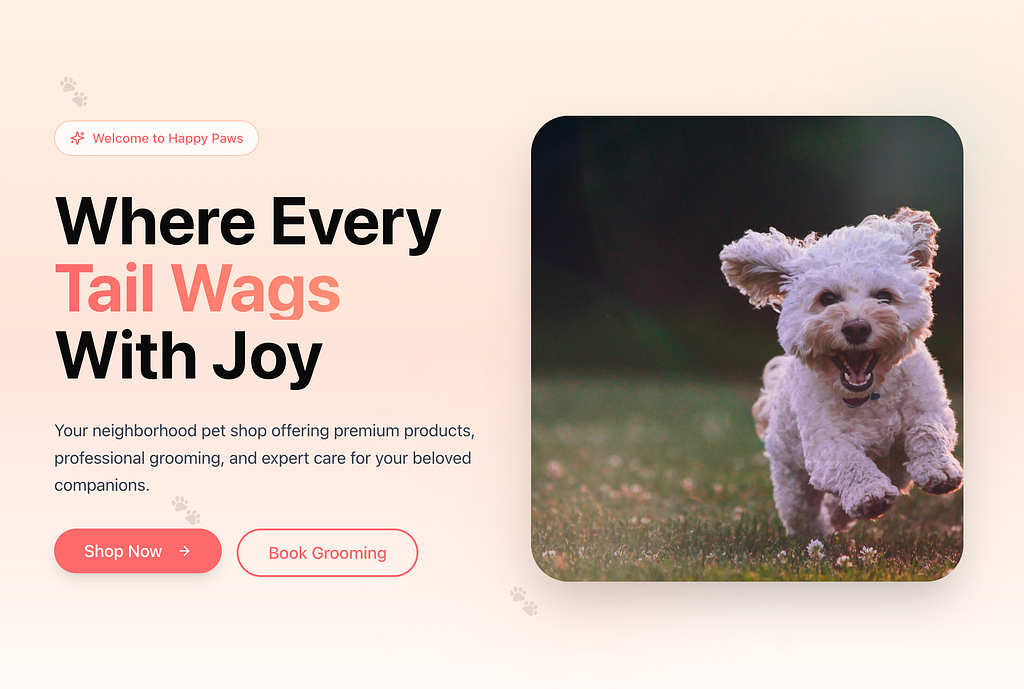

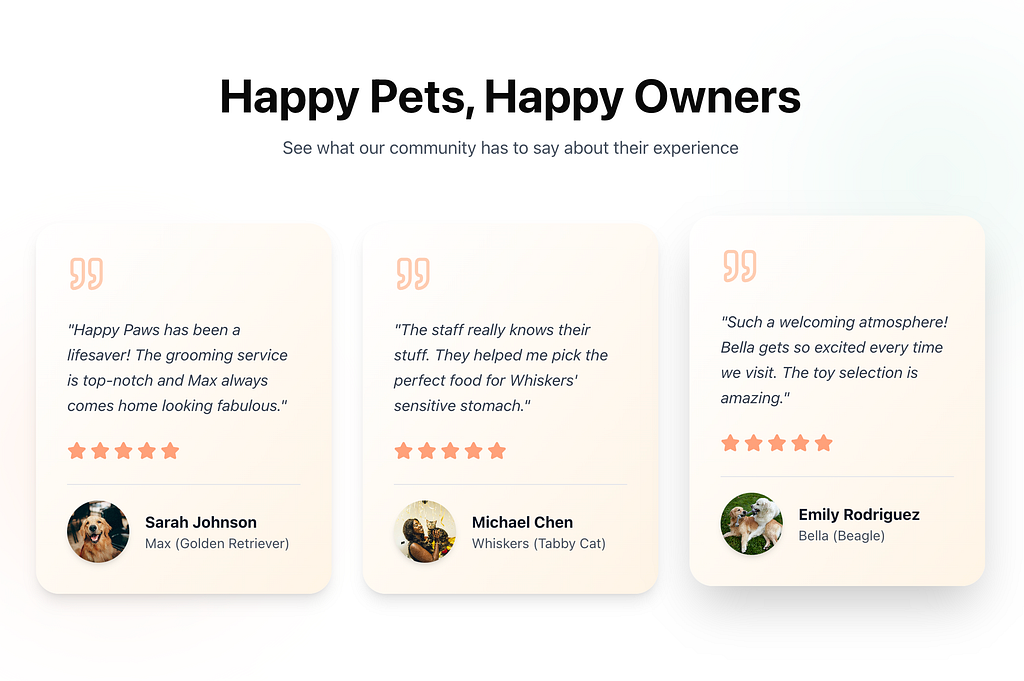
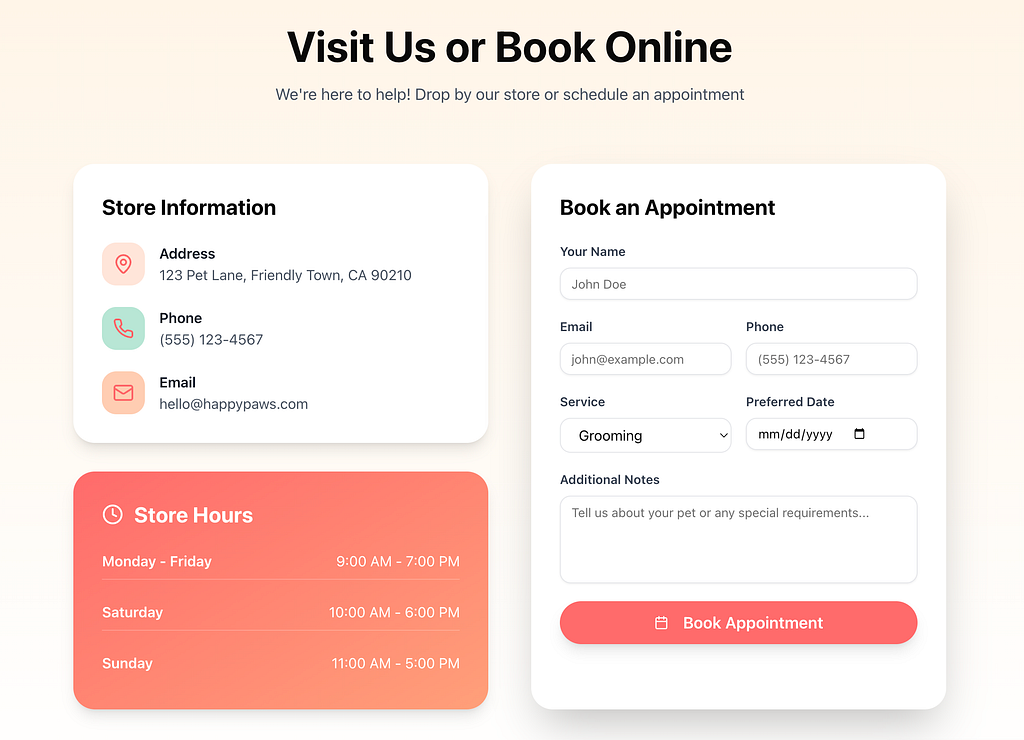
First of all, I had a lot of fun watching this happen. The agent understands context incredibly well. I love how it deliberately creates AI images with its image generator agent and how it makes the whole web app responsive.
A template of this quality would usually cost around $50–$100 on a popular theme marketplace. But we were able to create it for free in under 10 minutes. How cool is that?
Here’s another cool landing page example:
Prompt: A cinematic, scroll-choreographed landing experience for media launches, built for marketing and design teams who need precise, high-impact pages without sacrificing performance. It ships with responsive React components, and a floating animation, production-ready.
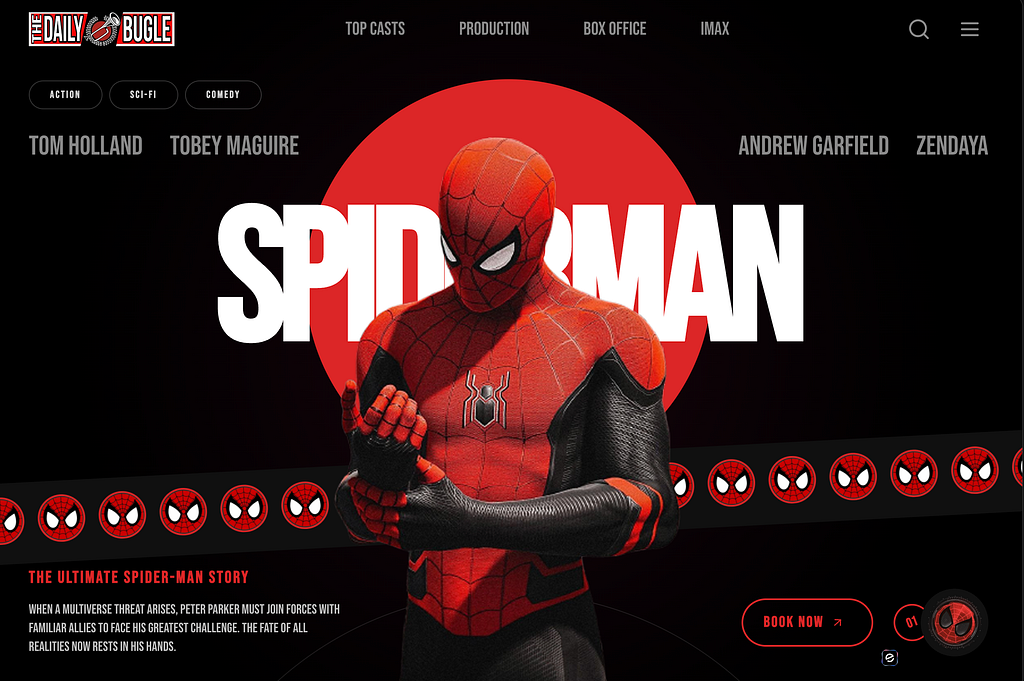

In fact, to illustrate how much better a page generated with Emergent is compared to its competitor, I fed the same prompt to Lovable, and this is what I got.

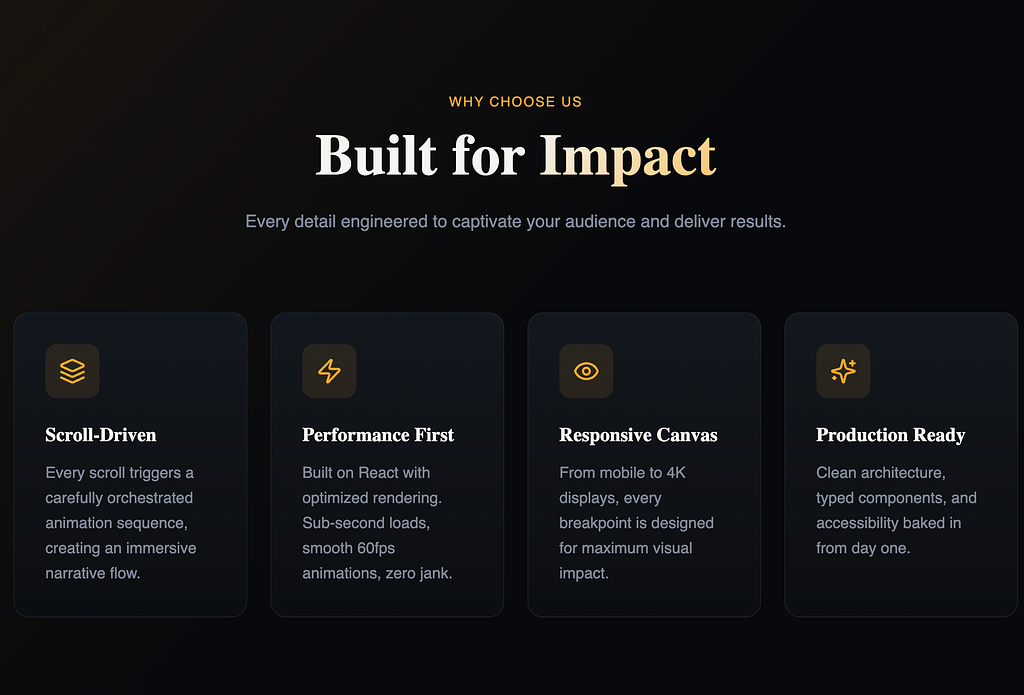
Yeah, I know, it’s plain, generic, and outright boring.
You can clearly see how much better the one created with Emergent is. It deliberately adds images and illustrations that make the UI pop and smartly organizes the layout to make the UX as optimized as possible. While the competitor gave me a wall of text, Emergent gave me a vibe.
Why a landing page matters
Why focus so much on landing pages?
A landing page is the front door to your digital product. In the world of indie hacking and startups, validation is everything. You could have the most sophisticated AI algorithm running in the backend, but if your landing page looks like a science project from 1999, nobody is going to sign up.
Users judge the credibility of your software within milliseconds of the page loading. A well-made, professional landing page signals security, competence, and quality. If the design is broken, users subconsciously assume your code is broken too.
Search engines like Google are also getting smarter. They look at “Core Web Vitals” to see how fast your content paints and how stable the layout is. A poorly coded landing page with heavy assets will rank lower.
Because Emergent generates code using modern frameworks like Next.js, the output is often server-side rendered or statically generated, which is exactly what Google loves. It gives you a performance head start that manual coding or clunky drag-and-drop builders often miss.
Also, a landing page exists to convert a visitor into a user. The layout, the spacing between sections, and the contrast of the Call to Action (CTA) button are functional requirements. A tool that understands these nuances and builds with “conversion” in mind saves you hours of A/B testing later.
Emergent pricing
Now let’s talk about the pricing. Emergent operates on a credit-based model. It offers free and three paid subscription tiers:
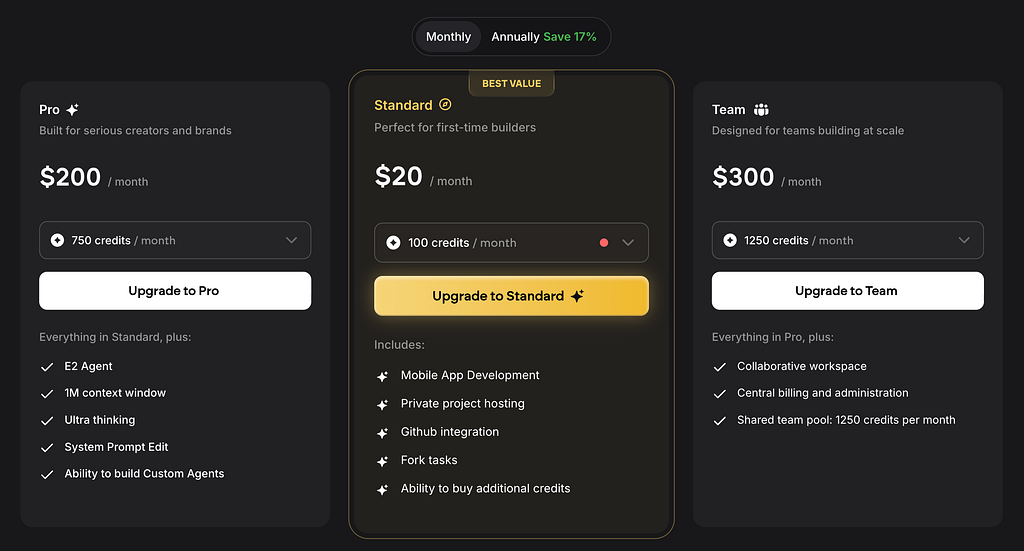
- Free Plan: You get 10 free credits. This is enough to try the environment and build that pet shop landing page I showed you.
- Standard Plan ($20 per month): You get 100 credits. This unlocks Mobile App Development and private hosting. If you are serious about launching a real product and not just playing around, you need this for the GitHub integration.
- Pro Plan ($200 per month): You get 750 credits. This gives the AI agent a massive memory to remember your entire project structure, all your files, and your previous instructions. This is for power users building complex apps.
- Team Plan ($300 per month): You get a shared pool of 1250 credits, a collaborative workspace, and central billing for your team.
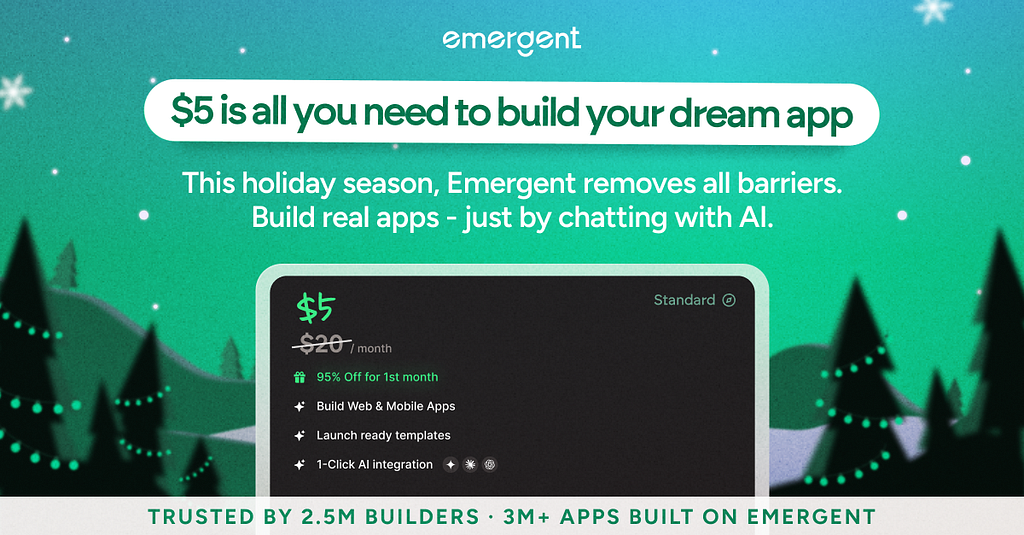
And by the way, Emergent is currently running a 75% discount on the Standard Plan (coupon code: GFF75) on account of Google Future’s Fund’s investment in Emergent.
Final Thoughts
First of all, a landing page doesn’t just need to be beautiful. The combination of components, text, layout, and images matters a lot. If a landing page sucks, users will close that tab without hesitation.
Also, search engines like Google evaluate a good landing page before suggesting it to users. So if you want your page to rank high, you need to make it look good and effective. Emergent does a pretty good job at this.
Another thing is design. I’ve tried Cursor, Warp, Claude Code, and many other popular vibe coding tools. The initial results when you ask them to build a landing page are usually stereotypical, full of gradients, and dark-themed pages. It doesn’t look bad, but the aesthetic makes it look so AI-generated.
Emergent does a better job at making better-looking pages with 3D objects, beautiful animations, and high-quality UI components. It seems to understand “modern minimalism” or “bento grid layouts” much better than its competitors.
Take note that while I highlighted the landing page generation capability of Emergent, it is capable of so much more. You can build a full-stack web app with it, integrate powerful tools, and also create mobile apps that you can launch on iOS and Android.
Go ahead, give it a try, and let me know what you think!

This story is published on Generative AI. Connect with us on LinkedIn and follow Zeniteq to stay in the loop with the latest AI stories.
Subscribe to our newsletter and YouTube channel to stay updated with the latest news and updates on generative AI. Let’s shape the future of AI together!

If You Want to Build Beautiful Landing Pages, Here’s A Vibe Coding Tool Worth Checking Out was originally published in Generative AI on Medium, where people are continuing the conversation by highlighting and responding to this story.
Source link






Add comment